Letter from Richard Howell to Col. Israel Shreve, 5 October 1778

Below is a transcript of a letter from Richard Howell to his friend, and Commanding Officer, Colonel Israel Shreve1 about some personal letters Richard wrote to his future wife, Kaziah Burr,2 that were left unattended by the mail carrier and opened by an unknown individual. The letters were then presented to “the council,” presumably the Quaker Council of Elders.3 This greatly incensed Richard. It is known that Kaziah was a Quaker. Quakers, being anti-war, generally discouraged their daughters from being involved with military officers.

Major Richard Howell Writes Benedict Arnold, June 20, 1778

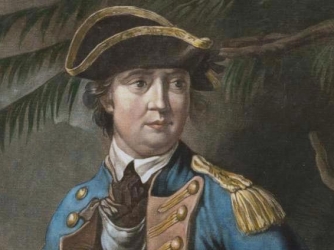
Benedict Arnold

Below is a letter that Richard Howell wrote on June 20th, just 8 days before the Battle of Monmouth, which was fought on June 28, 1778.1 It contains vital enemy tactical intelligence for the planning of that battle, to be relayed from Arnold2 to General Maxwell.3 Source citations are at the end of this post. It also describes some of the atrocities the British were visiting on the civilians in New Jersey.

Post-War Letters

Letters written after the Revolutionary War, including correspondence from Richard Howell’s time as Governor of New Jersey.1 Howell served as Governor of New Jersey from 1793 to 1801, elected annually for six consecutive terms.2 As governor, he commanded New Jersey militia forces during the Whiskey Rebellion of 1794, leading an expedition to western Pennsylvania in response to President Washington’s call for troops.3 Primary source letters from his governorship have not yet been digitized for this page; key archives to consult include the New Jersey State Archives (Trenton) and the New Jersey Historical Society. For related earlier correspondence, see the Revolutionary War Correspondence section.

Pre-War Letters

Letters written before Richard Howell goes to war.1


  1. Richard Howell (1754–1802) was born in Gloucester County, New Jersey, and read law under Joseph Ellis in Burlington, N.J., prior to the Revolution. His pre-war political engagement included participation in the Greenwich Tea Burning of December 22, 1774 — one of the few documented acts of colonial protest outside of Boston — and service on local Committees of Correspondence in Cumberland County. Primary source letters from this period have not yet been digitized for this page; for context on his wartime service, see the Revolutionary War Correspondence section. ↩︎